
Overtime tracking and compliance for nonprofits

Nonprofits face complex FLSA overtime rules. ClickTime tracks every hour worked, flags overtime risk, and creates audit-ready records to protect your budget and funding.

Get a demo

Overtime surprises destroy nonprofit budgets

  • Set overtime alerts that notify managers before employees cross the 40-hour threshold—so you catch cost overruns before they hit your grant budget
  • See real-time labor costs broken out by program, grant, and cost center to identify where overtime is concentrated
  • Generate detailed reports showing total hours worked, overtime hours, and associated costs for any reporting period

FLSA classification gets complicated—your records shouldn't

  • Track hours by employee classification—exempt and non-exempt—so you can verify who qualifies for overtime pay under the Fair Labor Standards Act
  • Maintain the defensible, timestamped records you need to demonstrate compliance with federal and state wage and hour laws
  • Pull classification and hours data on demand—no scrambling to piece together time logs when questions arise

Every overtime hour allocated to the right funding source

  • Tie each hour—including overtime—to specific grants, programs, and functional expense categories required under 2 CFR 200
  • Produce grant-level labor cost reports that show exactly how staff time and overtime were distributed across funding sources
  • Maintain a complete audit trail with timestamps, approvals, and manager sign-offs that satisfy federal, state, and funder compliance requirements
Integrations

Purpose-built for labor cost data, not pieced together

View all integrations

Every entry includes approval workflows, complete change history, and instant reporting. Whether it's R&D tax credits, client billing disputes, or grant compliance, you have defensible records without scrambling through spreadsheets or Jira logs.

Smart Match
Smart Match
Smart Match
Smart Match
Smart Match
Smart Match

Solution FAQs

Does the FLSA apply to nonprofit organizations?

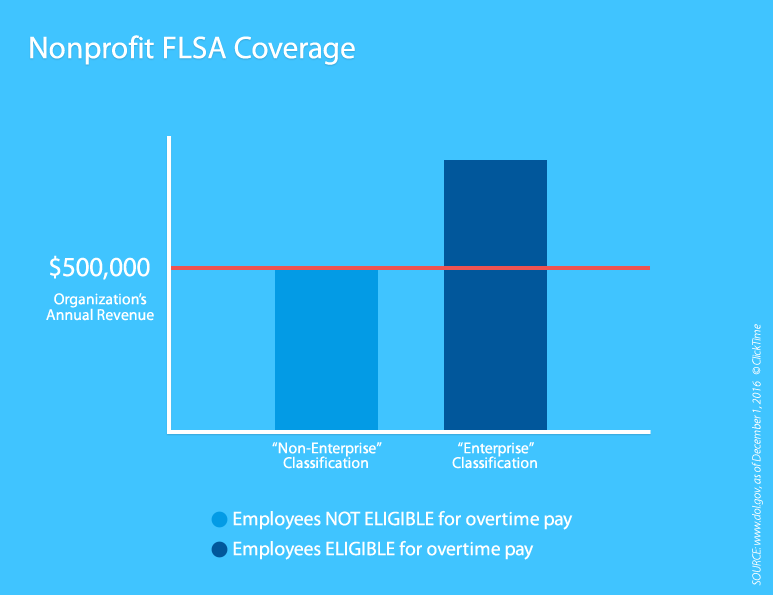
Yes. The Fair Labor Standards Act applies to nonprofits that qualify as covered enterprises—generally those with $500,000 or more in annual revenue. Even if a nonprofit doesn't meet the enterprise threshold, individual employees may be covered if their duties involve interstate commerce, such as sending or receiving interstate mail, making out-of-state phone calls, or handling transactions across state lines.

Do nonprofits have to pay overtime?

Nonprofits covered by the FLSA must pay non-exempt employees overtime—typically 1.5 times their regular rate—for any hours worked beyond 40 in a workweek. Some employees in executive, administrative, or learned professional roles may be exempt from overtime if they meet specific salary and duties tests defined by the Department of Labor. Misclassifying employees as exempt is one of the most common compliance risks for nonprofits.

How do nonprofits track overtime for grant compliance?

Grant-funded nonprofits need to allocate every hour—including overtime—to specific grants and programs with documentation that satisfies 2 CFR 200 requirements. ClickTime ties each time entry to the correct funding source at the moment of entry, with built-in approval workflows and audit trails. This creates the defensible labor cost records funders and auditors require without adding administrative burden to your team.

What are common overtime compliance mistakes nonprofits make?

The most frequent mistakes include misclassifying non-exempt employees as exempt, failing to track hours worked for salaried non-exempt staff, and not allocating overtime costs to the correct grant or program. These errors can lead to wage and hour violations, audit findings, and repayment demands from funders. A time tracking system that enforces proper classification and allocation at the point of entry helps nonprofits avoid these risks.

How do state laws affect nonprofit overtime policies?

Federal FLSA rules set the baseline, but many states have stricter overtime requirements—including higher salary thresholds for exemptions, different rules for calculating overtime rates, and additional record-keeping obligations. Nonprofits operating in multiple states need to comply with whichever standard is more protective of the employee. Maintaining accurate, state-by-state labor records is essential for organizations with distributed teams.

Do nonprofits have to pay overtime?

Yes. Nonprofits are generally subject to the Fair Labor Standards Act (FLSA), which requires employers to pay non-exempt employees at least 1.5 times their regular rate for hours worked beyond 40 in a workweek. While some nonprofits engaged exclusively in charitable activities may not meet FLSA enterprise coverage thresholds, individual employees engaged in interstate commerce—such as processing credit card transactions or sending emails across state lines—are still covered. Nonprofits should classify every position carefully and track hours worked to avoid wage and hour violations.

How does the FLSA apply to nonprofit organizations?

The FLSA applies to nonprofits through two paths: enterprise coverage and individual coverage. Enterprise coverage applies to nonprofits with annual revenue above $500,000 from ordinary commercial activities (not donations). Individual coverage applies when any employee is personally engaged in interstate commerce—which includes routine activities like making phone calls across state lines or handling credit card payments. In practice, most nonprofits have at least some employees covered by the FLSA and must comply with its overtime and minimum wage provisions.

How can nonprofits track overtime for grant compliance?

Grant compliance requires nonprofits to document how every labor dollar—including overtime—was spent against specific funding sources. ClickTime lets organizations allocate each hour to the correct grant, program, or cost center at the point of entry, creating the defensible records required under 2 CFR 200. Built-in approval workflows and audit trails mean you can produce grant-level labor cost reports on demand, without reconstructing records after the fact.

What are common overtime compliance mistakes nonprofits make?

The most costly mistakes include misclassifying employees as exempt when they don't meet FLSA salary or duties tests, failing to track hours worked for salaried non-exempt staff, and not allocating overtime costs to the correct funding sources. These errors can trigger Department of Labor penalties, back-pay obligations, and audit findings that jeopardize grant funding. Accurate time tracking by employee classification is the foundation for avoiding all three.

Stop losing visibility into your largest expense

Book a demo
Ask a question