Automated time tracking from the tools your teams already use

Smart Match captures work activity from Jira, GitHub, Calendar, and Zoom—then maps it to GL codes, CapEx, OpEx, and R&D categories for finance-ready reporting.

Get a demo
Trusted by thousands of companies of all sizes

Automate time capture—without changing how teams work

When time tracking depends on memory, the data falls apart. Employees forget entries, managers chase updates, and finance discovers gaps only after the numbers stop adding up. According to ClickTime's 2025 research, 40% of finance leaders don't trust their own labor cost data—and manual entry is a major reason why.

ClickTime Smart Match pulls activity from the tools your teams already use—Calendar, Jira, GitHub, Zoom, and more—and with optional AI, matches that time to the categories finance actually cares about: GL codes, CapEx, OpEx, R&D, and beyond. Employees confirm suggested entries in seconds instead of recreating them from memory. No surveillance. No workflow disruption. Just accurate, finance-ready labor data captured where work happens.


Accurate time data without manual entry

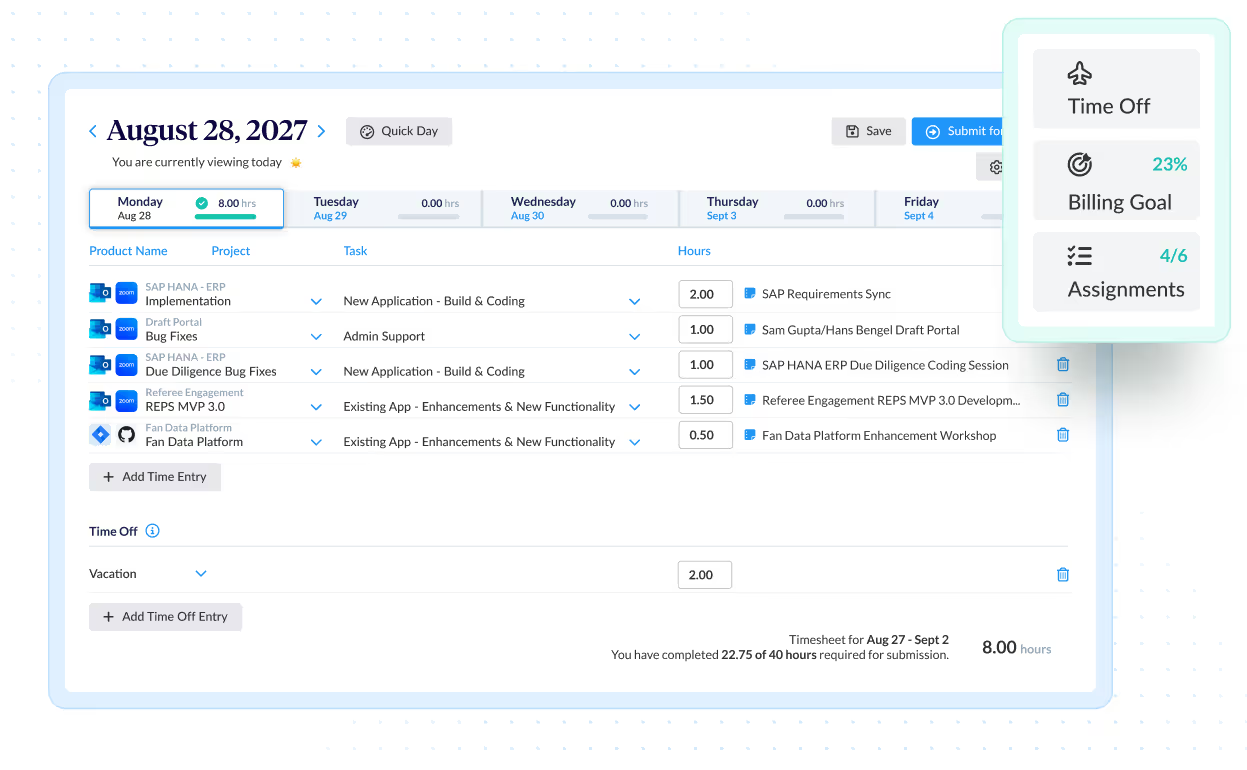
Smart Match captures hours from work tools and maps them to the right projects, cost centers, and financial categories

Finance-ready from the moment of capture

Every entry carries GL codes, billing categories, and cost allocations—no reconciliation needed after the fact

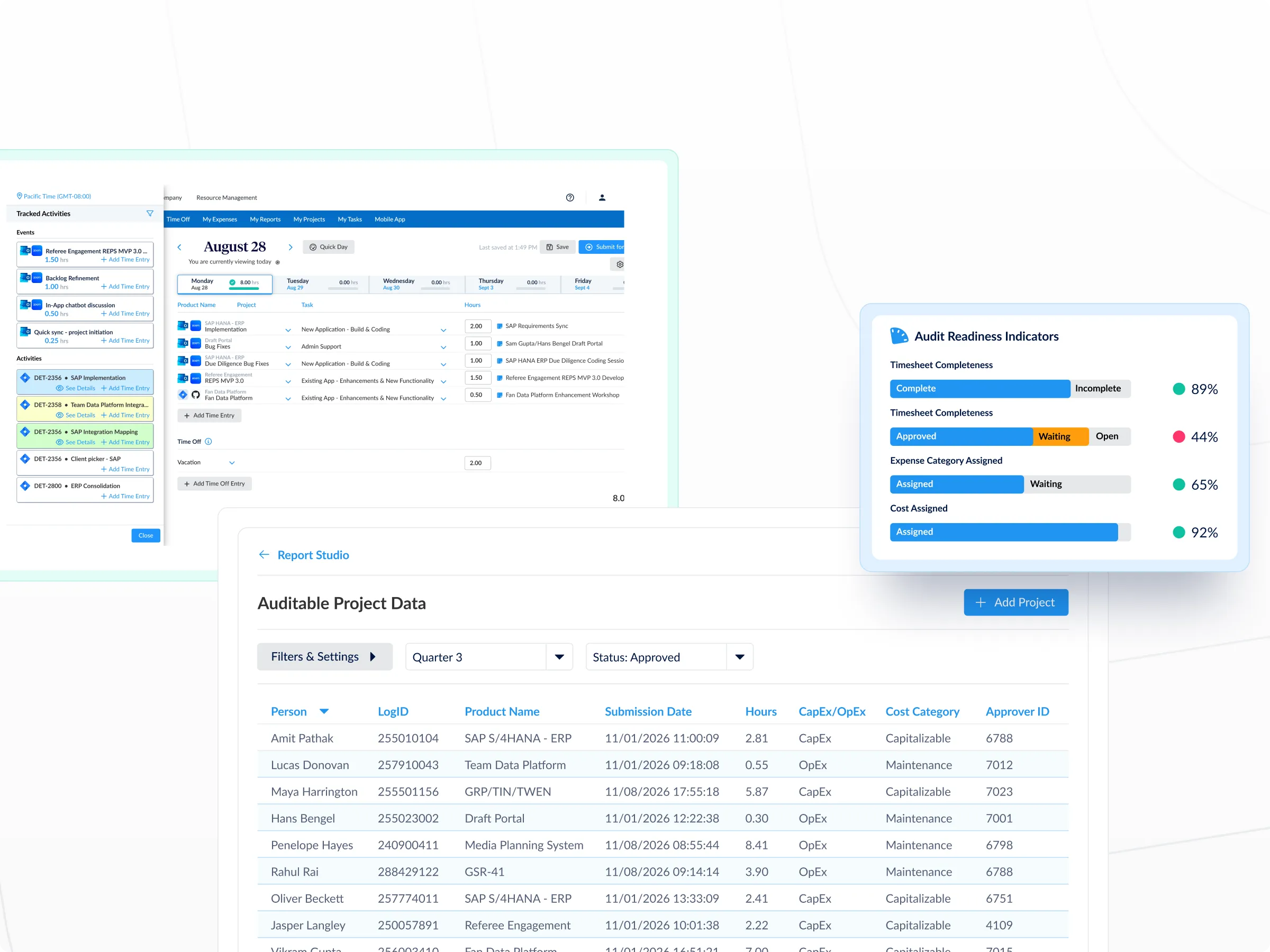
Audit-ready approval trail

Built-in review and approval workflows make your labor cost data defensible when auditors come asking

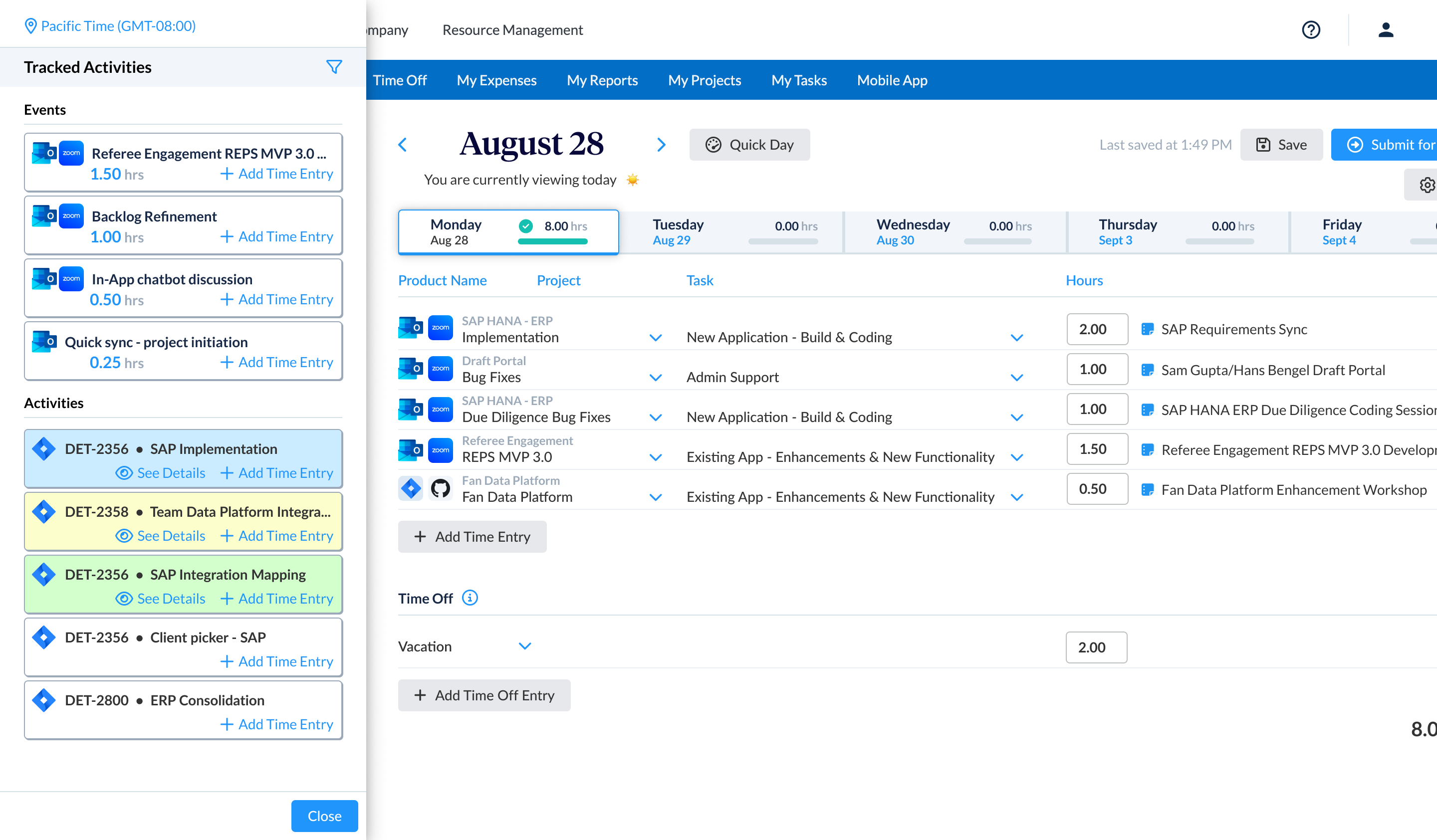
Turn calendar events and meetings into structured time entries

  • Convert meetings, focus blocks, and working sessions into time entries tied to the right projects, tasks, and cost centers—so finance can see exactly where hours go
  • Employees confirm suggested entries instead of recreating them from memory, reducing friction and improving accuracy across departments
  • Identify where teams spend too much time in meetings or on projects that aren't earning an ROI—so leaders can reallocate hours to higher-value work

Connect development work to labor costs with Jira and GitHub

  • Import Jira work logs and GitHub activity into ClickTime, where Smart Match groups related work into projects or epics with cost centers and GL codes applied
  • Optional AI maps development hours to financial categories like CapEx, R&D, and bug fixes—the categories that matter for software capitalization and tax credits
  • Give finance-ready reporting on engineering labor without asking developers to log time twice

Build trust in your largest line item

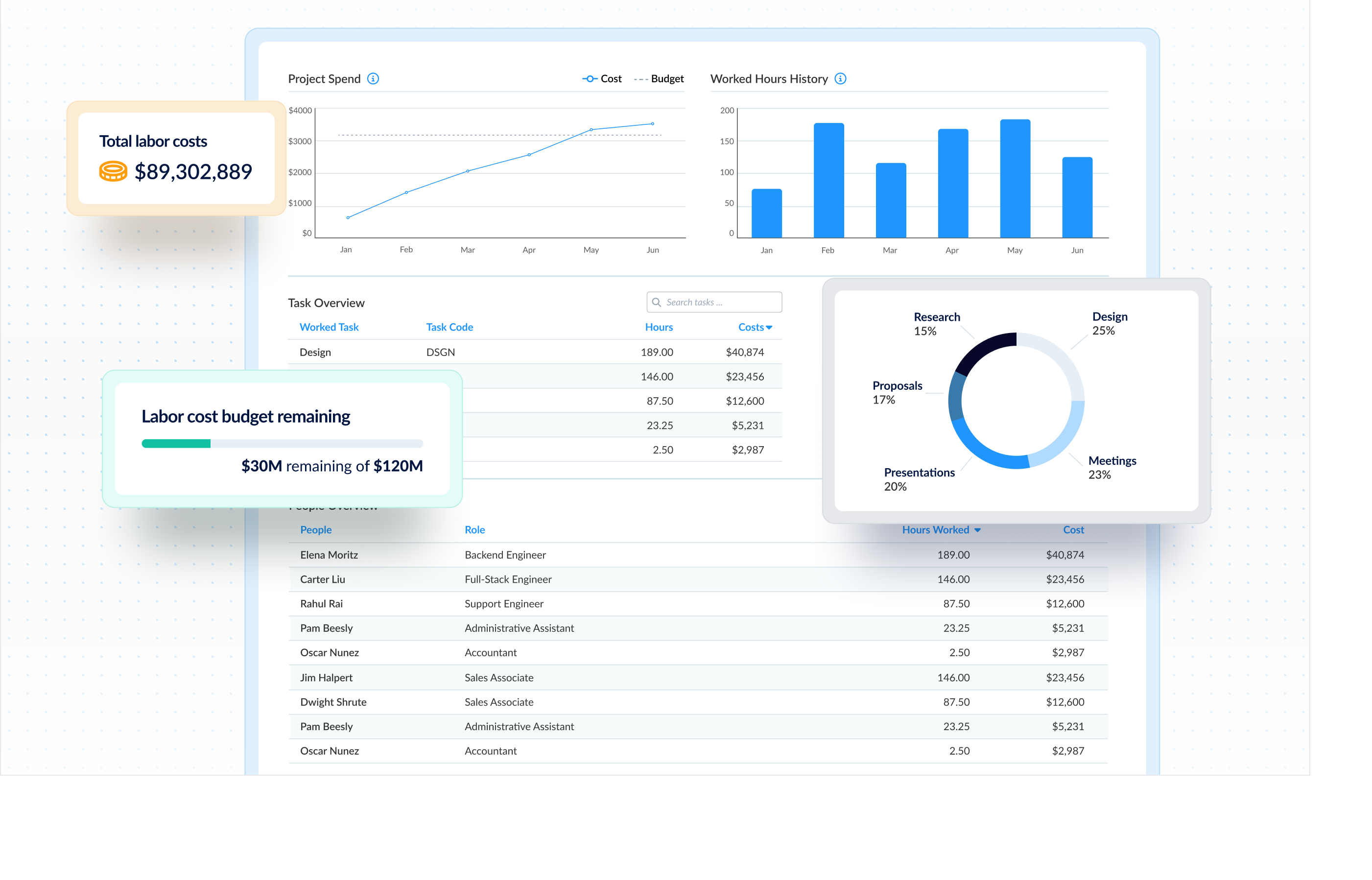
  • Track utilization rates with verified data flowing from the tools where work happens—not from end-of-week estimates
  • Catch cost overruns early with real-time visibility into labor spend across projects and departments
  • Give finance and operations one shared record of where hours go—so budgeting, billing, and compliance all start from the same source
Integrations

Purpose-built for labor cost data, not pieced together

View all integrations

Every entry includes approval workflows, complete change history, and instant reporting. Whether it's R&D tax credits, client billing disputes, or grant compliance, you have defensible records without scrambling through spreadsheets or Jira logs.

Smart Match
Smart Match
Smart Match
Smart Match
Smart Match
Smart Match

Feature FAQs

What is an automated time tracker?

An automated time tracker captures work hours from the tools employees already use—like calendars and project management platforms—instead of requiring manual entry from memory. ClickTime takes this further by structuring each captured entry with financial mappings like project codes, cost centers, and GL accounts. The result is finance-ready labor data that supports billing, budgeting, and compliance without adding administrative burden.

How does automated time tracking work?

ClickTime integrates with tools like Google Calendar and Jira to pull in work activity as suggested time entries. Employees review and confirm these entries in seconds rather than building them from scratch. Each entry is tied to the correct project, cost center, and billing category at the moment of capture—so finance gets structured, accurate data without relying on employee memory.

What are the advantages of automated time tracking over manual entry?

Manual time tracking depends on employees remembering what they worked on and logging it accurately—a process that introduces errors and gaps at scale. ClickTime's 2025 research found that 40% of finance leaders don't trust their own labor cost data, often because of unreliable manual processes. Automated time capture reduces that risk by pulling verified activity from existing tools and applying financial structure before the data ever reaches a report.

How can automated time tracking improve labor cost accuracy?

When time entries flow from actual work activity rather than end-of-week memory, the data is inherently more accurate. ClickTime adds financial context—project codes, cost centers, GL mappings—at the point of capture, then routes entries through approval workflows for verification. This creates an audit-ready record of labor costs that finance can trust for budgeting, billing, and compliance reporting.

What is an automated time tracker?

An automated time tracker captures work activity from the tools employees already use—like calendars, Jira, and GitHub—instead of requiring manual time entry. ClickTime's Smart Match takes this further by mapping captured hours to finance-defined categories like GL codes, CapEx, OpEx, and R&D at the moment of capture. The result is accurate, finance-ready labor data without the friction of manual logging.

How does automatic time tracking work without surveillance?

ClickTime Smart Match pulls structured activity data from work tools—calendar events, Jira tickets, GitHub commits—and presents them as suggested time entries for employees to confirm. It does not monitor screens, track keystrokes, or record browsing activity. Employees stay in control of what gets submitted, while finance gets the accurate data they need for billing, budgeting, and compliance.

Is automatic time tracking more accurate than manual time entry?

Yes. Manual time entry relies on memory, which degrades quickly—most employees reconstruct their week from fragments, leading to gaps and misallocations. ClickTime's 2025 research found that 40% of finance leaders don't trust their own labor cost data, largely because of manual entry problems. Automated time tracking captures hours from source systems in real time, so entries reflect what actually happened rather than what someone remembered days later.

What tools does ClickTime integrate with for automated time capture?

ClickTime Smart Match integrates with Jira, GitHub, Google Calendar, Outlook, Zoom, and other tools where work happens daily. Each integration pulls activity data into ClickTime as suggested time entries, already mapped to your financial categories. See the full list on our integrations page.

Stop losing visibility into your largest expense

Book a demo
Ask a question